
Which Swiss Banks Dominate Google AI Search? (German-Speaking Switzerland)
Google is now answering your customers’ banking questions before they reach your website. In German-speaking Switzerland, that shift is just getting started.
21% of banking searches now trigger an AI Overview, and the competitive positions are not yet locked in. The banks that move now will shape how Google answers for years. The banks that wait will be written out of the conversation.
We analyzed 349 German-language keywords covering retail banking across the cantons of Zurich, Bern, Basel, Aargau, St. Gallen, Lucerne, and beyond.
For each keyword: does Google trigger an AI Overview? Which banks does it mention? Which websites does it trust as a source?
Here’s what we found:
- Which banks Google names most often, and which cantonal banks are completely invisible
- Why a non-Swiss fintech earns more AI citations than UBS, Raiffeisen, and ZKB combined
- Where the gap between brand mentions and source citations exposes the real opportunity
- Which category has no entrenched leader and the widest open door for new entrants
- Why insurance brands, not banks, dominate the highest-trigger category in the study
Why this study? To understand which banks Google’s AI trusts in German-speaking Switzerland
What is a Google AI Overview?
When a German-speaking Swiss customer types “Welches ist die beste Bank in der Schweiz?” into Google, they may no longer see a ranked list of websites first.
Instead, Google’s AI generates its own answer, a structured response that sits above every organic result.
That answer is called an AI Overview. It is not an advertisement. It is not a website ranking. It is Google deciding to answer the question itself, drawing on content it has already crawled.
Approximately 30% of German internet users regularly use GenAI for research and decision-making, with particularly high adoption among ages 18–35 (Claneo, Search Study 2025).
That behavioral shift is already shaping how German-speaking Swiss banking customers encounter their options. The AI Overview is the first impression, before a bank’s own website, before a comparison platform, before any branded content.
In der Schweiz zählen UBS, Neon und Migros Bank zu den empfohlenen Banken für Privatkunden. Neon und Migros Bank bieten kostenlose Kontoführung und wettbewerbsfähige Sparzinsen. UBS punktet mit einem umfassenden Filialnetz und einer breiten Produktpalette — allerdings mit monatlichen Kontogebühren.
What is inside an AI Overview?
Two metrics define AIO performance in this study.
Brand mentions are the banks Google names inside the AI-generated answer. “UBS, Migros Bank und Neon bieten kostenlose Konten an” counts as three brand mentions. Being mentioned means Google considers you relevant to the question. It is the minimum bar.
Source citations are the websites Google links at the bottom of the AI answer. The domains it used to construct the response.
Being cited as a source is the higher-value outcome. You are not just named; Google’s AI used your content to build the answer. Your domain is shaping what Google tells customers about the entire category.
The distinction matters more than it might look. A bank can be mentioned in 30% of AI Overviews and still have zero source citations. Google talks about you but uses someone else’s website to do it.
That gap, between being a noun in the answer and being an authority behind it, is what this study exposes. In German-speaking Switzerland, the gap is structurally wide. Yuh appears in 28% of all AIO responses as a brand. yuh.com does not appear as a source domain anywhere in the corpus.
What we measured
349 German-language keywords. Six topic categories covering the full retail banking decision journey in German-speaking Switzerland.
For every keyword where Google triggered an AI Overview, we recorded which brands appeared and which domains were cited.
This is the German-speaking counterpart to our French-speaking Switzerland study — same methodology, different market, 374 keywords, 48.4% overall AIO trigger rate for reference. The structural patterns are consistent; the competitive positions are not. This article stands alone.
What are German-speaking Swiss banking customers searching for?
We grouped the 349 keywords into six topic categories. Individual keywords do not tell a useful story — “Welches ist die beste Bank in der Schweiz?” and “Welche Bank erhebt keine Gebühren?” are different queries but the same customer need.
Grouping by topic reveals which decisions Google’s AI is most active in.
| Category | Keywords | % of corpus | Dominant intent | Example queries |
|---|---|---|---|---|
| Bank Selection and Comparison | 144 | 41% | Commercial | “Welches ist die beste Bank in der Schweiz?”, “Welches sind die guten Online-Banken?”, “Welche Bank erhebt keine Gebühren?” |
| Account Opening and Eligibility | 53 | 15% | Informational | “Welche Unterlagen braucht man zur Kontoeröffnung?”, “Welche Schweizer Bank akzeptiert Nicht-EU-Bürger?”, “Welches Schweizer Online-Bankkonto ist für Nicht-Ansässige kostenlos?” |
| Savings Accounts and Deposit Rates | 52 | 15% | Commercial | “Wie hoch ist der Zinssatz eines Schweizer Sparbuchs?”, “Was ist das Schweizer Sparbuch A?”, “Wie hoch ist die Rendite eines Schweizer Kontos?” |
| Mortgages and Real Estate Financing | 54 | 15% | Informational | “Wie entwickeln sich die Hypothekarzinsen in der Schweiz?”, “Wie hoch ist derzeit der Hypothekarzinssatz in der Schweiz?”, “Wie finanziert man eine Immobilie in der Schweiz?” |
| Investments and Wealth Management | 34 | 10% | Commercial | “Welche Bank ist ideal zum Investieren?”, “Wie lautet das Ranking der besten Vermögensverwalter?”, “Wo sollte man 2026 sein Geld in der Schweiz anlegen?” |
| Pension and Retirement Planning (Säule 3a/3b) | 12 | 3% | Informational | “Was ist der Unterschied zwischen Säule 3A und 3B?”, “Welches ist die beste dritte Säule in der Schweiz?”, “Wo kann ich meine dritte Säule eröffnen?” |
The biggest category by a wide margin is Bank Selection, over 40% of the entire corpus. These are top-of-funnel queries: the customer has not chosen a bank yet.
That is where AI Overviews carry the most influence on the final shortlist. A customer asking “Welches ist die beste Bank in der Schweiz?” is not browsing, they are forming a consideration set.
If your bank is absent from Google’s AI answer at that moment, you are not on the list.
Account Opening and Eligibility (15%) reflects something distinctive about the German-speaking market. A meaningful share of those 53 keywords captures Grenzgänger, non-residents, and expats working out how to meet Swiss banking eligibility requirements.
Traditional banks have not built the editorial content to answer them. Independent expat guides are filling the gap instead and earning the source citations that should belong to the banks.
How often does Google answer with AI and who does it cite?
The overall AIO trigger rate across all 349 keywords is 21% in German-speaking Switzerland, significantly lower than the 48.4% we measured in the French-speaking market.
This is not a minor variance. It reflects a market where Google has not yet found sufficient high-quality, citable sources to generate AI Overviews for most banking queries. The lower rate also means competitive positions are less entrenched. The next 12 months are the window.
The rate varies dramatically by category, from 17% in Savings to 50% in Pension Planning. Where the stakes are highest, Google is most active.
| Category | AIO trigger rate | #1 brand (%) | #1 source (%) | Avg brands per AIO |
|---|---|---|---|---|
| Bank Selection and Comparison | 26% | Neon (42%) | wise.com (21%) | 8.3 |
| Account Opening and Eligibility | 30% | UBS (50%) / Migros Bank (50%) | thepoorswiss.com (19%) / raiffeisen.ch (19%) / wise.com (19%) | 6.8 |
| Savings Accounts and Deposit Rates | 17% | UBS (44%) / ZKB (44%) | moneyland.ch (33%) | 4.8 |
| Mortgages and Real Estate Financing | 24% | VZ VermögensZentrum (31%) / ZKB (31%) | hypotheke.ch (38%) | 3.2 |
| Investments and Wealth Management | 32% | UBS (73%) | vermoegenszentrum.ch (36%) | 9.6 |
| Pension and Retirement Planning (Säule 3a/3b) | 50% | ZKB (50%) / PostFinance (50%) | zurich.ch (33%) / swisslife.ch (33%) / raiffeisen.ch (33%) / zkb.ch (33%) | 3.5 |
Two things jump out immediately.
The highest AIO trigger rate sits in Pension Planning (50%) and that category is dominated on the source side by insurance brands (zurich.ch, swisslife.ch), not banks.
Second, the most brand-crowded categories — Investments at 9.6 brands per AIO, Bank Selection at 8.3 — are also where source authority is most fragmented or held by non-Swiss platforms like wise.com.
Being named is easy in these categories. Being the source is not. Here is each category in detail.
Bank Selection and Comparison
The biggest category (144 keywords, 41% of corpus). AIO triggers on 26% of queries. With 8.3 brands cited per AIO response on average, this is the most congested space in the corpus.
- Top 5 brands: Neon (42%), UBS (37%), Yuh (34%), Zak (34%), Migros Bank (32%).
- Top 5 source domains: wise.com (21%), neon-free.ch (16%), zkb.ch (13%), migrosbank.ch (11%), moneyland.ch (11%).
The top cited source is wise.com, a non-Swiss fintech publishing German-language banking comparison content for the Swiss market. Google is describing Swiss banking options using a foreign comparison platform as its primary authority.
neon-free.ch is the only brand-owned domain in the top five, and it earns that position because Neon’s homepage works like a comparison page, clear positioning, named features, explicit fee statements, not because of a blog post.
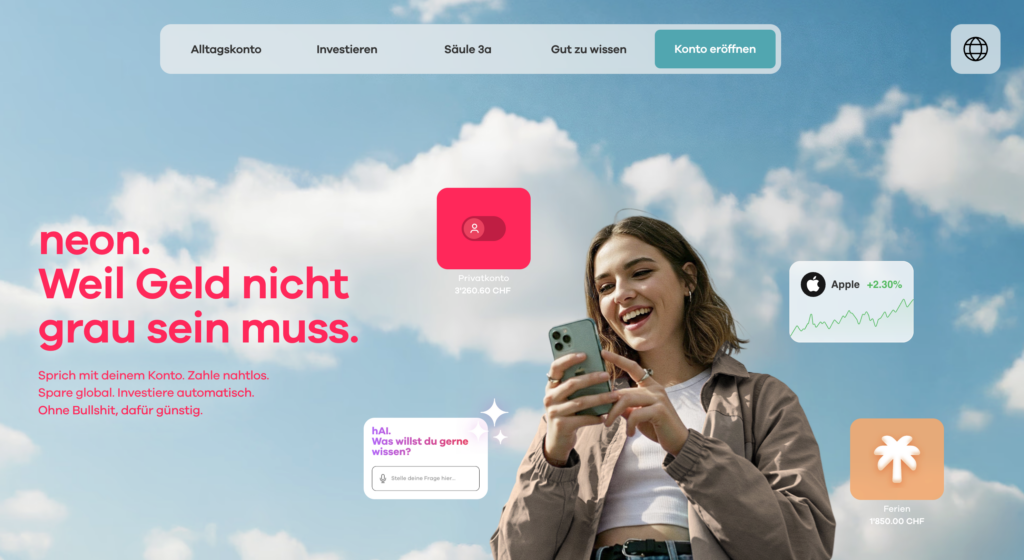
Traditional cantonal banks are almost entirely absent from source citations despite their brand names appearing across many queries.
The intent split reinforces why this matters: 74% of Bank Selection queries are commercial intent. These are customers in the consideration phase, actively deciding which banks to evaluate.
What Google’s AI tells them in that moment shapes the shortlist. In this corpus, the answer Google builds most often names Neon, UBS, Yuh, Zak, and Migros Bank, in that order by brand citation frequency.
Account Opening and Eligibility
53 keywords, 30% AIO trigger rate. The intent split, 55% informational, 27% commercial, 18% transactional, reflects a user base that is not just comparing banks but actively trying to understand the process: eligibility by residency status, document requirements, minimum deposits.
- Top 5 brands: UBS (50%), Migros Bank (50%), PostFinance (44%), Yuh (38%), ZKB (31%).
- Top 5 source domains: thepoorswiss.com (19%), raiffeisen.ch (19%), wise.com (19%), migrosbank.ch (13%), zkb.ch (13%).
Independent expat voices, thepoorswiss.com, and further back in the data, ibani.com, earn as many source citations as the largest Swiss banks in this category.
Non-resident banking queries are better answered by independent guides than by official bank product pages.
The brand-to-source gap here is severe: UBS earns 50% brand citation, but ubs.com does not appear in the top five sources. Any bank targeting Grenzgänger or expats and lacking a structured eligibility guide is invisible at the most commercially valuable search moment.
Savings Accounts and Deposit Rates
Lowest AIO trigger rate in the corpus: 17%. 52 keywords, predominantly commercial intent (54%).
- Top 5 brands: UBS (44%), ZKB (44%), PostFinance (33%), Neon (33%), Yuh (33%).
- Top 5 source domains: moneyland.ch (33%), cash.ch (22%), vermoegenszentrum.ch (22%), schwiizerfranke.com (22%), ubs.com (11%).
The 17% trigger rate signals that Google does not yet have reliable, citable sources for most savings rate queries in German-speaking Switzerland.
moneyland.ch leads at 33%, but no source has established dominance, three different domain types share the top positions, none of them close to definitive.
The category is genuinely open. A bank publishing a transparent, structured rate comparison page updated monthly would be entering a source landscape where Google is actively looking for an answer and hasn’t found one yet.
Mortgages and Real Estate Financing
54 keywords, 24% AIO trigger rate. The highest-value product category by transaction size.
- Top 5 brands: VZ VermögensZentrum (31%), ZKB (31%), Luzerner Kantonalbank (23%), HYPOTHEKE.ch (23%), Migros Bank (15%).
- Top 5 source domains: hypotheke.ch (38%), comparis.ch (23%), vermoegenszentrum.ch (23%), moneypark.ch (15%), zkb.ch (15%).
The most striking brand-to-source divergence in the corpus. hypotheke.ch dominates mortgage AIO source citations at 38%, more than any single bank.
The major retail banks (UBS, Raiffeisen, PostFinance) earn zero source citations in mortgages despite being market leaders in mortgage lending.
Customers asking mortgage questions receive AI answers sourced entirely from rate comparison platforms, not lenders. Luzerner Kantonalbank earns 23% brand visibility through its mortgage content, a rare AIO win for a regional cantonal bank, and the model others should study.
Investments and Wealth Management
34 keywords, 32% AIO trigger rate. The most brand-dense category in the corpus: 9.6 brands per AIO response on average.
- Top 5 brands: UBS (73%), VZ VermögensZentrum (55%), Neon (36%), Yuh (36%), Swissquote (36%).
- Top 5 source domains: vermoegenszentrum.ch (36%), wise.com (27%), ubs.com (27%), de.wikipedia.org (18%), finanztip.de (18%).
The one category where a traditional bank genuinely dominates both layers. UBS’s 73% brand citation rate is exceptional, and ubs.com appears as a source in 27% of category AIOs. The investment content depth on ubs.com is being rewarded directly.
As an industry benchmark: UBS ranks #7 globally in the 2025 Evident AI Banking Index with an AI maturity score of 50.2, that editorial investment in structured, deep content is consistent across internal and external measures. (JP Morgan Chase leads that global ranking at #1 with a score of 79. The index measures internal AI maturity, not public-facing AIO discoverability — a distinct metric, but the direction of travel is the same.)
VZ VermögensZentrum’s 55% brand citation rate signals how trusted independent financial advisory brands have become in Google’s investment query model. finanztip.de, a German consumer finance brand, not Swiss, earns 18% of category source citations. Another non-Swiss voice shaping Swiss investment answers.
Pension and Retirement Planning (Säule 3a/3b)
Highest AIO trigger rate in the corpus: 50%. Smallest category at 12 keywords (3% of corpus). High-consideration, long-term decisions.
- Top 5 brands: ZKB (50%), PostFinance (50%), Raiffeisen (33%), VZ VermögensZentrum (33%), Zurich Versicherung (33%).
- Top 5 source domains: zurich.ch (33%), swisslife.ch (33%), raiffeisen.ch (33%), zkb.ch (33%), finpension.ch (17%).
The most strategically important category per keyword in the corpus, one in two pension queries triggers an AIO. And it is dominated on the source side by insurance brands, not banks. zurich.ch and swisslife.ch each earn 33% of category source citations.
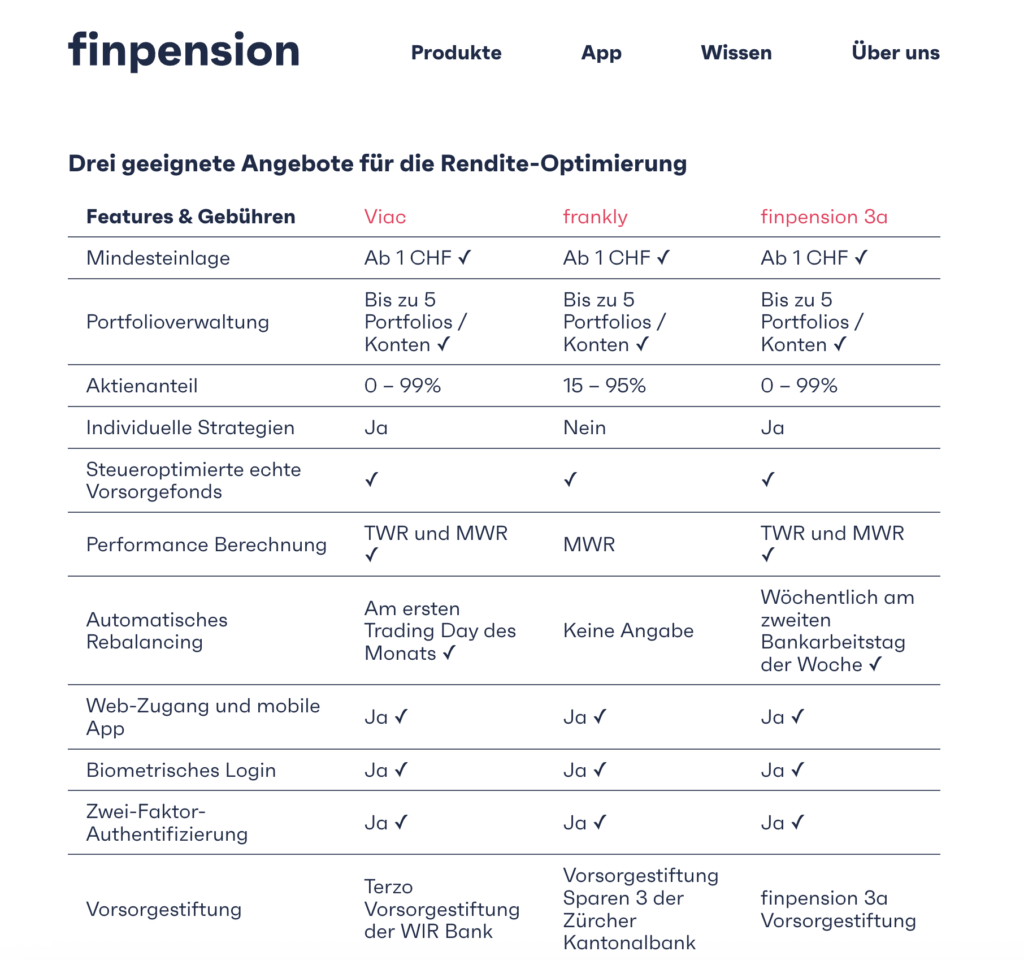
finpension.ch, the Säule 3a fintech, earns AIO citations through a named competitor comparison page (“Säule-3a-Vergleich: Die besten Anbieter im Überblick”) rather than a product page. VIAC is brand-mentioned in the category but its domain does not appear in the top sources, a content structure gap, not a brand awareness gap.
For any bank with a Säule 3a offer, this is the category to address first.
Does search intent change who Google cites?
Not all searches are equal. Someone researching “Was ist die dritte Säule?” is in a different moment than someone typing “Wie eröffne ich ein Konto in der Schweiz?”.
We classified all 349 keywords by intent to see whether Google’s AI answers behave differently at each stage.
| Intent | Keywords | AIO rate | Top 3 brands | Top 3 source domains |
|---|---|---|---|---|
| Informational | 123 | 20% | UBS (29%), ZKB (21%), VZ VermögensZentrum (21%) | hypotheke.ch (21%), vermoegenszentrum.ch (17%), comparis.ch (13%) |
| Commercial | 196 | 23% | Neon (41%), UBS (41%), Yuh (39%) | wise.com (24%), neon-free.ch (13%), migrosbank.ch (13%) |
| Transactional | 30 | 17% | Raiffeisen (60%), Migros Bank (60%), N26 (40%) | raiffeisen.ch (60%), migrosbank.ch (40%), neon-free.ch (20%) |
Four structural patterns emerge from this breakdown.
Commercial intent dominates AIO activity. Commercial queries trigger AIO at 23%, the highest of any intent type, and generate nearly 9 brands per response on average.
Neon (41%) and UBS (41%) tie for top brand. But the top source domain is wise.com at 24%. A non-Swiss fintech is co-authoring the AI answer Swiss customers receive when they type “Welche Bank ist ideal zum Investieren?”.
This is the market-framing risk: Germany-based and international aggregators are defining what the German-speaking Swiss banking market looks like, because Swiss banks and comparison platforms haven’t built equivalent content at scale.
Transactional queries show the tightest brand-to-source alignment. Transactional queries trigger AIO at only 17%, but when they do, raiffeisen.ch is simultaneously the top brand and the top source domain, each cited in 60% of triggered responses.
Migros Bank earns 60% brand citation and 40% domain citation in transactional queries, the second-cleanest alignment pattern in the corpus. Well-structured account-opening pages on your own domain can capture both layers at once. That is the alignment model every brand in this market should be replicating.
Informational queries are fragmented at the source level. Informational queries (20% AIO rate) show the most dispersed source landscape.
hypotheke.ch (21%) and vermoegenszentrum.ch (17%) lead both independent platforms. UBS leads brand citations at 29%, but ubs.com is not in the top three sources for informational intent. The pattern repeats: brand visibility is achievable with scale and name recognition. Source authority requires a different content investment.
Source thinning at the transactional level. Transactional queries have the thinnest source coverage overall.
Banks could own this space by publishing structured, action-oriented pages, account-opening guides, step-by-step Säule 3a enrollment, Grenzgänger eligibility breakdowns, that answer “how do I start” questions Google currently routes to small advisory sites and Wise.
Who is the most visible bank in Google AI search in German-speaking Switzerland?
The category and intent data above shows the landscape in detail. These are the structural patterns across the full 349-keyword corpus.
One in five banking queries triggers an AI answer but the variance is dramatic
21% overall. Significantly lower than French-speaking Switzerland at 48.4%.
But that average conceals the full picture. Pension Planning triggers AIO half the time. Account Opening at 30%, Investments at 32%, Mortgages at 24%.
Where the stakes are highest, Google is most active.
The lower overall rate in this market means German-speaking Swiss banking is at an earlier stage of AIO adoption, which makes the current window the critical period for banks to establish source positions before the competitive structure hardens.
Banks aren’t the source, comparison platforms and international voices are
Official brand websites account for only 25% of all AIO source citations in this market.
Third-party voices, comparison platforms (19%), independent blogs (14%), media (10%), expat and advisory sites (12%), account for 48% of all citations, nearly double the share held by bank-owned content.
wise.com alone appears in 19% of all AIO responses across five of six categories. moneyland.ch at 9%. hypotheke.ch at 7%.
For the typical Swiss bank, Google answers questions about their products by citing someone else three times out of four.
The source layer is not a marginal gap, it is the default state.
UBS leads, and is the only bank dominant in both layers
UBS appears in 39% of all AIO responses across all six categories. It is the only brand cited everywhere, the floor of this market.
ubs.com earns source citations in 12% of all AIO responses, making UBS one of the rare brands where brand visibility and domain authority move together.
This dual-layer dominance is structural: UBS publishes deep, structured content across all major banking topics, and Google rewards breadth and depth consistently. No other Swiss bank in this corpus has matched this pattern across the full query set.
Which bank leads Google AI search in German-speaking Switzerland? UBS is the only brand that appears in all six topic categories, holds the highest cross-corpus brand citation rate at 39%, and earns the only consistent dual-layer citation profile.
That does not reflect brand prestige. It reflects editorial investment at scale.
Migros Bank, Yuh, Neon, Raiffeisen: strong brand presence, structural gaps
Migros Bank appears in 33% of all AIO responses across five categories. It shows particular strength in transactional queries, 60% brand citation rate, 40% domain citation rate, suggesting its account-opening content is well-structured for action-oriented queries.
The model works. The question is whether Migros Bank extends the same structural approach to other categories.
Yuh appears in 28% of all AIO responses across four categories (Bank Selection, Account Opening, Savings, Investments). High brand citation, zero domain-level source citations from yuh.com. That gap, strong brand presence, absent content authority, limits Yuh’s ability to control what Google says about it.
Neon appears in 25% of all AIO responses across four categories and leads Bank Selection at 42% brand citation. neon-free.ch earns 8% of all AIO source citations, one of the few brands in this corpus where brand citation and domain citation are reasonably aligned.
The mechanism is the homepage structure: Neon’s brand page reads like a comparison, and Google cites it directly.
Raiffeisen appears in 25% of all AIO responses across five categories, with raiffeisen.ch as the second most cited bank-owned domain overall (13% of all AIO responses). Particularly strong in transactional queries where it leads both layers simultaneously.
Cantonal banks: BEKB, AKB, LUKB are invisible. It’s a content problem
BEKB / bcbe.ch (Berner Kantonalbank): 0% across all 349 keywords. Zero brand mentions. Zero source citations. The cantonal bank for the Swiss capital, the city that houses FINMA, the Swiss National Bank, and the federal government, does not exist in Google AI search across the full German-speaking retail banking corpus.
AKB / akb.ch (Aargauische Kantonalbank): 0%. Aargau is one of the most populous cantons in German-speaking Switzerland. AKB residents searching for banking options are being directed to Neon, wise.com, and UBS by Google’s AI. AKB does not appear in any of those answers.
LUKB / lukb.ch (Luzerner Kantonalbank): thin presence. Cited as a source for one keyword and brand-mentioned in mortgage AIOs at 23%, a rare win for a regional cantonal bank. But brand citation without domain authority is a structural vulnerability, not a market position.
In French-speaking Switzerland, BCGE, the largest retail bank in Geneva, earned 0% brand mentions. In German-speaking Switzerland, the pattern repeats with BEKB and AKB.
The root cause is the same: product-and-branch-oriented websites with no editorial layer, no rate comparison content, and no structured informational pages that AIO can parse and cite.
Regulatory solidity and regional trust do not translate to AIO presence.
International platforms are co-authoring Swiss banking answers
wise.com at 19% of all AIO source citations, across five of six categories. finanztip.de at 18% in Investments. de.wikipedia.org at 18% in Investments.
Same structural pattern as the French market, where comparabanques.fr earned 13.5% of commercial-intent AIO source citations.
Foreign platforms with no Swiss regulatory expertise are treated as authoritative third-party voices because they publish exactly the structured, comparison-forward content that AIO sourcing favors.
Swiss banks and Swiss comparison platforms have not built equivalent content at scale, and the gap is being filled by international aggregators. For a CMO at a Swiss bank, that is not an SEO footnote, it is a market-framing problem.
What content earns Google AI citations in German-speaking Switzerland?
The study shows a consistent pattern. It is not brand size, domain authority, or marketing budget that earns AIO citations. It is content format.
Four specific content plays appear repeatedly in the source data, each with a named example from this corpus.
Homepages built for citation, not just conversion
neon-free.ch is cited in 8% of all AIO responses, directly from its homepage. The page title “neon: dein smartes, mobiles und gebührenfreies Schweizer Konto” carries clear, structured positioning, and Google sources it directly for queries like “Welche Banken bieten digitale Konten an?”.
cler.ch (Bank Cler / Zak app) shows the same pattern in the transactional intent data. A brand homepage optimized for direct citation, clear features, explicit fee statements, named product attributes in the first 200 words, earns source citations that product pages and brand narratives do not. Audit whether your homepage is set up for citation, not just for conversion.
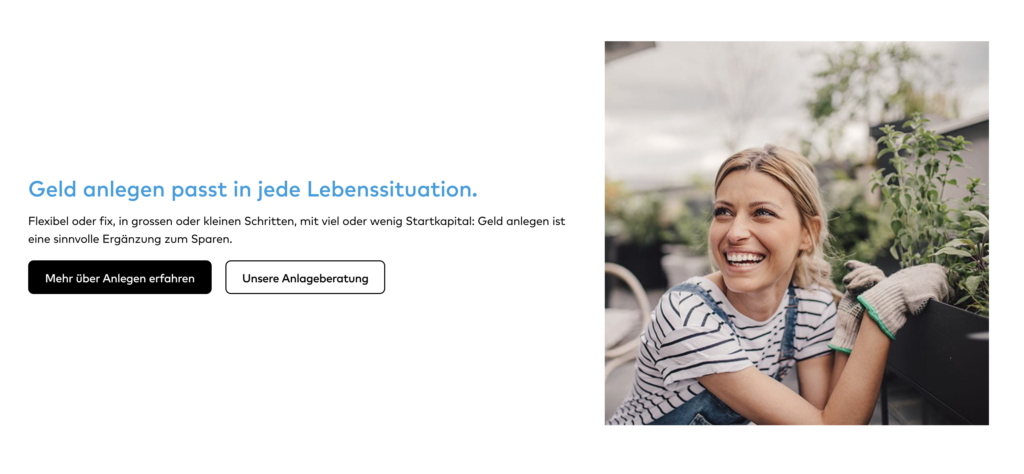
Structured rate comparison pages as the primary AIO entry point
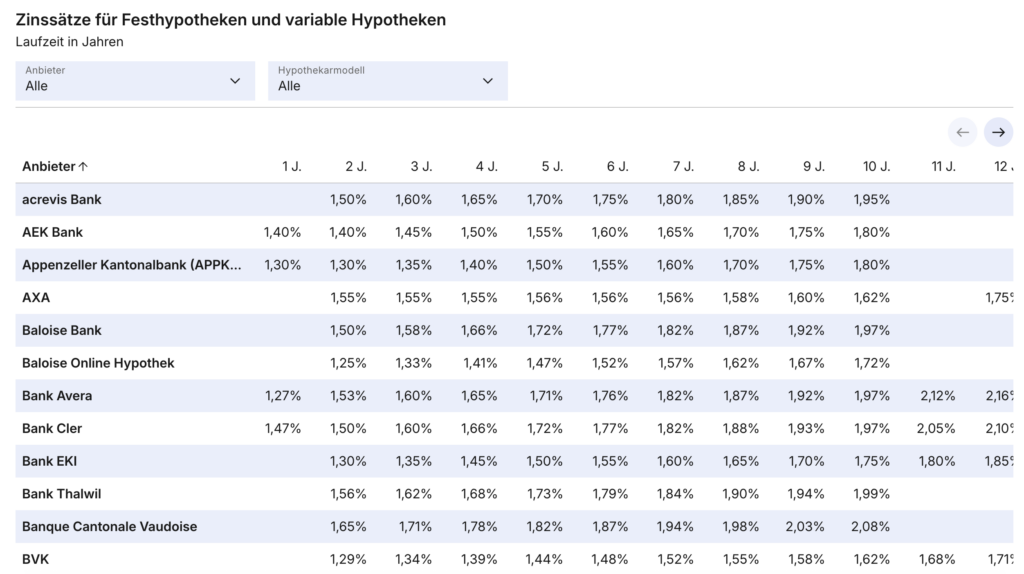
hypotheke.ch dominates mortgage AIO source citations at 38% via pages like
- “Zinsen Hypotheken — Grosser Schweizer Zinsvergleich” (hypotheke.ch/vergleich-zinsen-hypothek/).
- vermoegenszentrum.ch follows with “Aktuelle Hypothekarzinsen im Vergleich” (vermoegenszentrum.ch/vergleiche/aktuelle-hypothekarzinsen-im-vergleich).
Both pages are structured rate tables, not editorial articles. Google cites them because they answer rate queries directly and completely.
The market gap is clearest in Savings, 17% AIO trigger rate, no source above 33%, the source landscape fragmented across moneyland.ch (33%), cash.ch (22%), vermoegenszentrum.ch (22%), and schwiizerfranke.com (22%).
A live savings rate comparison table, updated monthly, would enter a category where Google is actively looking for citable sources and has not yet found a definitive one.
Editorial voice over institutional voice: the front-loaded entity pattern
wise.com earns 19% cross-corpus AIO source presence. A review of pages like wise.com/ch/blog/beste-bank-schweiz reveals the structural reason: the page opens with a named list of Swiss banks (UBS, Raiffeisen, Migros Bank, Neon, Zak, PostFinance) within the first 200 words, accompanied by fee figures and account-type labels.
High entity density in the opening section. Google’s AIO model reads the first 10–30% of a page most heavily, and Wise front-loads exactly the structured named-entity data that AIO citations require.
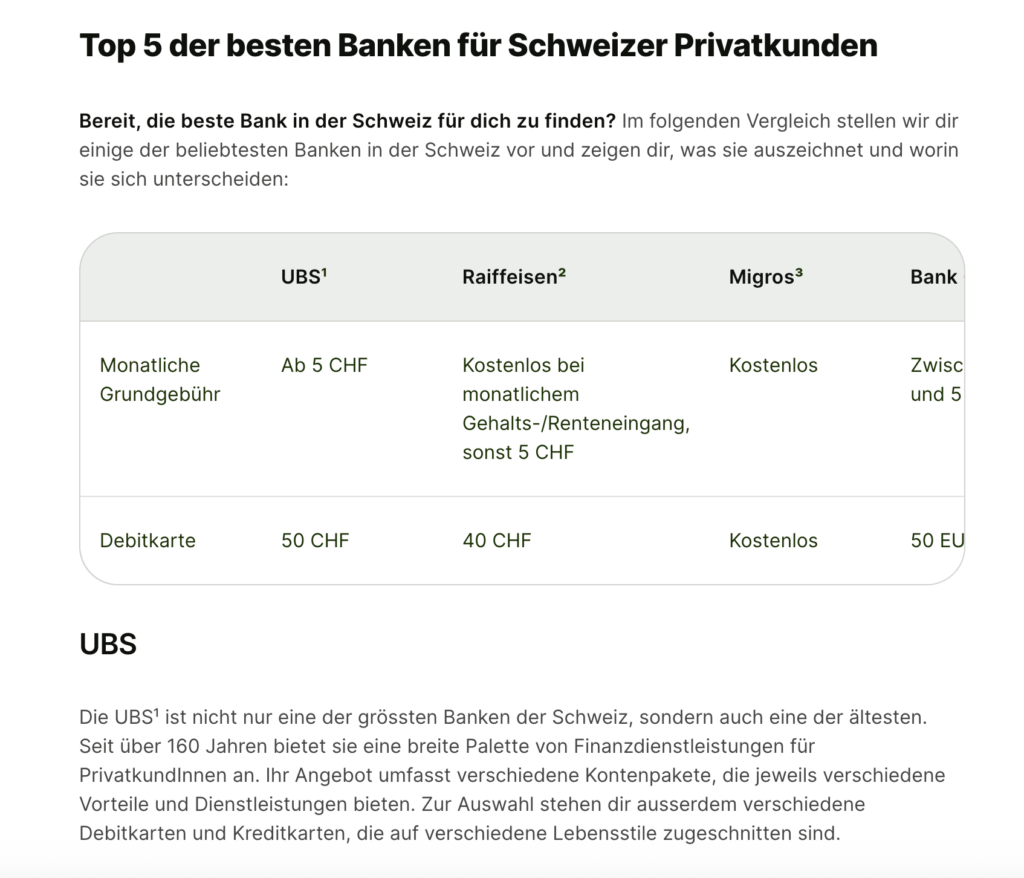
The implication for Swiss banks is not that they need to write like a competitor. Their own comparison pages need to lead with named banks, specific rates, and concrete product attributes, not brand narrative.
Open with the data, not the brand story.
Fintech brands publishing third-party-style editorial content
finpension.ch earns Säule 3a citations via a page titled “Säule-3a-Vergleich: Die besten Anbieter im Überblick” — a structured provider comparison where finpension cites and ranks its own competitors.
This mirrors the strategy of moneyland.ch and hypotheke.ch: editorial transparency earns citation trust. Google cites pages that compare the market, not pages that sell a product.
The opportunity is direct: Pension Planning has the highest AIO trigger rate in the corpus (50%) and is currently dominated on the source side by insurance brands, zurich.ch and swisslife.ch at 33% each.
Any bank with a Säule 3a offer that reframes its content as “best Säule 3a in Switzerland”, structured provider comparison, not product page, is competing directly for this citation space with no incumbent bank to displace.
What should German-speaking Swiss banks do now?
Five concrete next steps from the report. Not strategic principles. Specific editorial briefs a content team could execute this quarter and connect to a marketing funnel end to end.
Publish a structured, monthly-updated savings rate comparison page on your own domain
Savings has the lowest AIO trigger rate in the corpus (17%) and no entrenched source leader, moneyland.ch leads at only 33% of category AIOs.
The category is genuinely open.
A transparent, self-updating rate table, your rates vs peers, updated monthly with brief editorial context on rate changes, beats a product page every time for this query type.
The investment is one well-maintained page, not a content program. The category reward is source authority in a segment where Google is still looking for a reliable answer.
Build a dedicated Grenzgänger and non-resident banking guide.
Account Opening and Eligibility triggers AIO at 30%, and source coverage is fragmented between niche expat sites, thepoorswiss.com, ibani.com, and a handful of large bank domains.
No major bank has established clear source authority here. Any bank with a genuine non-resident offer and a structured eligibility page, documents required, minimum deposit, eligibility by visa and permit type, can enter source rotation for a segment where Google currently routes customers to independent guides because no bank has answered the question at source.
Audit your Säule 3a content against finpension.ch and the insurance incumbents.
Pension Planning has the highest AIO trigger rate (50%) and is dominated on the source side by zurich.ch and swisslife.ch, not banks.
finpension.ch earns AIO citations through a named competitor comparison, not a product page.
The path forward is clear: reframe 3rd pillar content as a buyer’s guide, not a brochure. Compare providers explicitly. Give the customer the answer Google is looking to cite.
Banks that hold a Säule 3a offer and currently publish only product-oriented pension pages are leaving the highest-trigger category in the corpus entirely to insurers and fintechs.
If your bank gets brand mentions but zero domain citations, publish one structured comparison page.
Yuh (28% brand visibility, yuh.com absent from sources), Revolut (20%, revolut.com absent), Swissquote (16%, swissquote.ch absent) all show this pattern.
The fastest path to a first source citation is one structured page: your fees vs the top three competitors, updated quarterly.
A fee comparison table with editorial context earns a citation faster than a brand story or a product landing page.
Start with one page, in one category, and measure. The gap between being named and being cited closes with a single well-structured content investment.
Neon vs. Yuh vs. the banks.
Account fees, card costs, and FX charges — side by side.
| Feature | Neon | Yuh | UBS | Migros Bank |
|---|---|---|---|---|
| Account | ||||
| Monthly fee | CHF 0 | CHF 0 | CHF 5.– (key4 digital) | CHF 0 (M-BancNet basic) |
| Account opening | App, ID scan, ~10 min | App, ID scan, ~10 min | Digital onboarding | Digital or branch |
| Savings rate p.a. | 1.00% | 1.30% | 0.60% | 0.75% |
| Card | ||||
| Debit card cost | CHF 0 | CHF 0 | CHF 50.– | CHF 30.– |
| Apple / Google Pay | ✓ | ✓ | ✓ | ✓ |
| Virtual card | ✓ | ✓ | ✓ (premium) | — |
| Foreign currency | ||||
| FX fee on card abroad | 0.5% | 0.95% | 1.75% | 1.5% |
| ATM withdrawal abroad | CHF 0 (2/month) | CHF 2.– | 1.75% | CHF 5.– |
| Transfers | ||||
| Domestic transfer | CHF 0 | CHF 0 | CHF 0 | CHF 0 |
| SEPA transfer | CHF 0 | CHF 0 | CHF 5.– | CHF 0 (online) |
Cantonal banks: address the AIO invisibility gap with structured editorial content.
BEKB at 0%, AKB at 0%, LUKB thin.
Regulatory solidity and regional trust do not translate to AIO presence without content that answers real customer questions.
The content program does not need to be large. It needs to be structured. A set of pages covering account comparison, savings rates versus market peers, Swiss mortgage rules, Säule 3a provider comparisons, and deposit protection, modeled on what moneyland.ch publishes, adapted to regional positioning, would transform structural AIO absence into competitive presence.
For BEKB and AKB in particular: the brand does not need to be rebuilt. The editorial layer does. The benchmark is already there. The investment is content architecture, not brand budget.
To Conclude
The core finding of this study is not that UBS leads — that is expected. It is that BEKB and AKB do not exist in their own market’s AI search results, that Yuh is mentioned everywhere and sourced nowhere, and that wise.com is co-authoring the AI answers German-speaking Swiss customers receive about their own banking options. Those are not algorithm quirks. They are the direct consequence of content decisions — or the absence of them.
The banks that appear as AIO sources chose to answer customer questions in writing, at scale, in a format that is structured and current. That choice is still available to the banks that have not made it. In German-speaking Switzerland, at 21% overall AIO trigger rate, the positions are not yet locked. The window is open — but comparison platforms and international aggregators are moving faster than most banks realize.